
How Long Do You Have to File a Personal Injury Claim in Michigan?
It is worth speaking with an employment lawyer early, ideally before you leave a job or take major steps, so you can preserve the right evidence from the start. An attorney can tell you which records matter most for your claim, how to collect them lawfully, and what deadlines apply.
Early guidance is especially valuable because some evidence becomes harder to obtain once you lose access to work systems. A lawyer can also assess the overall strength of your potential employment lawsuit and explain your options. The aim is a well-documented case and a clear understanding of the path ahead.
It is worth speaking with an employment lawyer as soon as you suspect retaliation, especially if you have faced a firing, demotion, or other serious action after a protected activity. An attorney can evaluate whether the facts support a claim, explain the relevant deadlines, and outline your options.
Early legal guidance also helps you preserve evidence and avoid steps that could undermine your position. Because employment laws are detailed and deadlines apply, a timely consultation matters. The goal is a clear understanding of your rights and a sound plan for protecting them.
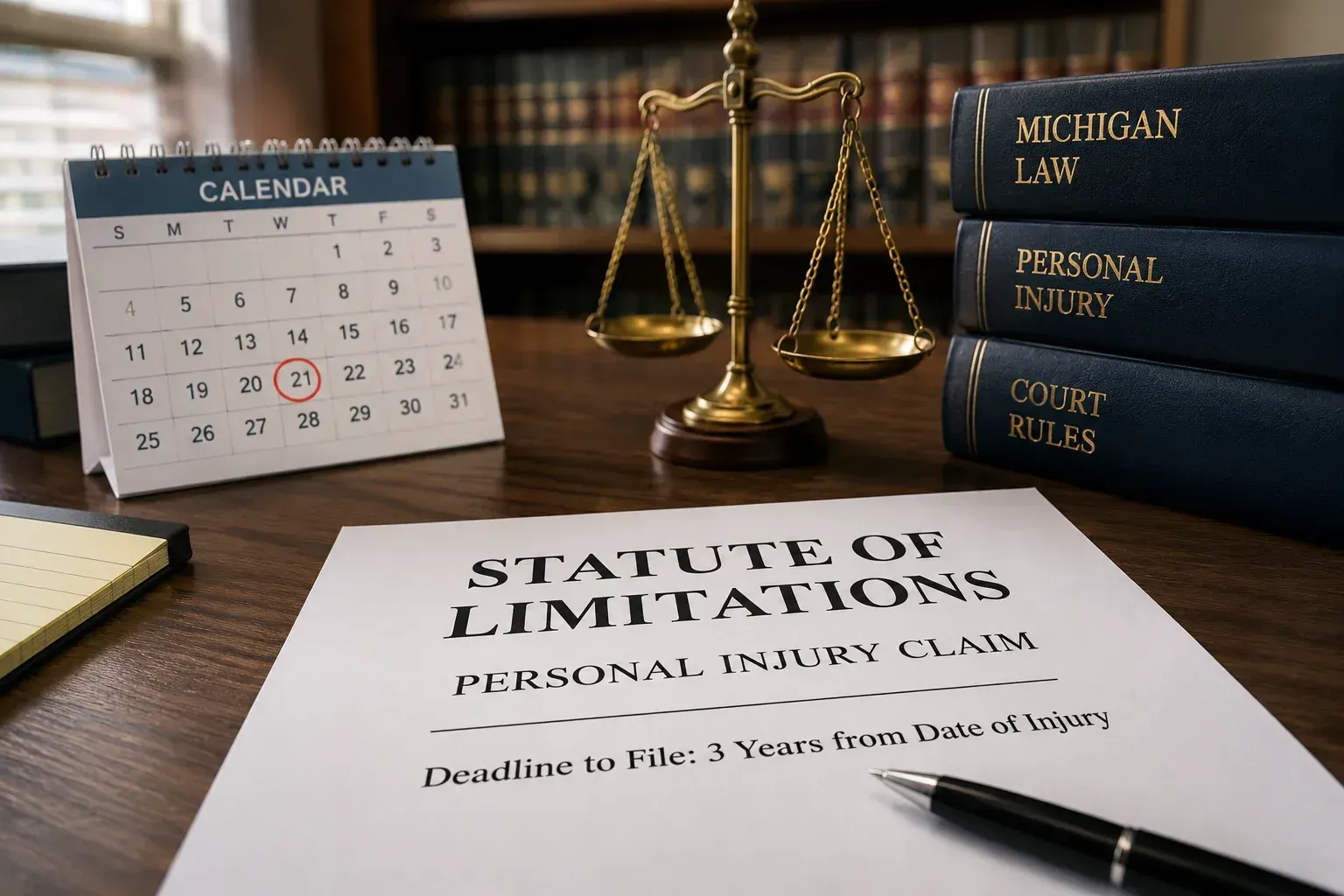
Table of Contents
- Michigan's General Statute of Limitations for Personal Injury
- Why the Filing Deadline Exists
- Exceptions That Can Change Your Deadline
- What Happens If You Miss the Deadline
- Insurance Claims vs. Lawsuit Deadlines
- Why Acting Early Matters, Even With Time Left
- Steps to Take If You're Considering a Claim
- Conclusion
Key Takeaways
- Michigan generally gives you three years from the date of injury to file a personal injury lawsuit
- Some cases, like those involving minors or government entities, follow different timelines
- Missing the filing deadline usually means losing your right to pursue compensation through the courts
- Insurance claims and lawsuit deadlines are not the same thing and often work on separate timelines
- Acting early helps preserve evidence, medical records, and witness accounts while they're still fresh
Introduction
In Michigan, you generally have three years from the date of your injury to file a personal injury lawsuit. This deadline is called the statute of limitations, and missing it usually means you lose the right to pursue your claim in court, no matter how strong the case might have been.
For anyone dealing with an injury from a car accident, a fall, or another type of incident, understanding this timeline matters. Medical bills pile up, insurance conversations drag on, and it's easy to lose track of how much time has actually passed since the injury occurred. Knowing the rules ahead of time, including how they apply to personal injury cases in Michigan, helps you avoid a costly mistake.
This article breaks down the standard deadline, common exceptions, and what typically happens when someone files too late.
Michigan's General Statute of Limitations for Personal Injury
Under Michigan law, most personal injury claims must be filed within three years of the date the injury occurred. This rule comes from Michigan Compiled Laws 600.5805 and applies broadly to cases like car accidents, slip and falls, and other negligence-based injuries.
The three-year clock typically starts on the day the injury happened, not the day you first felt pain or the day you decided to pursue a claim. This distinction matters because people sometimes assume the deadline is more flexible than it actually is.
It's worth noting that this three-year window applies to filing a lawsuit in court. It does not necessarily match the deadlines set by insurance companies for filing a claim, which are often much shorter.
Why the Filing Deadline Exists
Statutes of limitations exist for a few practical reasons. Over time, evidence becomes harder to gather. Witnesses move, forget details, or become difficult to locate. Physical evidence like skid marks or damaged property may no longer exist.
Courts also rely on these deadlines to keep the legal system functioning. Without time limits, cases could be filed decades after an incident, making it nearly impossible for anyone involved to defend themselves fairly.
For injury victims, this means the clock is working against you the moment an accident happens, even if you don't feel ready to think about legal deadlines during recovery.
Exceptions That Can Change Your Deadline
While three years is the general rule, several situations can shorten or extend this timeline.
Claims Involving Minors
If the injured person was under 18 at the time of the incident, Michigan law often allows extra time. In many cases, the clock doesn't start running until the minor turns 18, giving them until their 19th or 20th birthday to file, depending on the specific circumstances.
Claims Against Government Entities
Accidents involving government vehicles, city property, or municipal negligence usually come with much shorter deadlines. Some of these cases require a formal notice of intent within 120 to 180 days of the incident, well before the standard three-year window even applies.
Medical Malpractice Cases
Injury claims related to medical treatment follow different rules entirely, often based on when the injury was discovered rather than when it occurred. These cases typically fall outside the scope of a standard personal injury timeline.
Discovery of Injury
In rare situations, if an injury wasn't immediately apparent, the filing period may be calculated from when the injury was discovered rather than the date of the original incident. This exception is applied narrowly and depends heavily on the specific facts of the case.
What Happens If You Miss the Deadline
If the statute of limitations expires before a lawsuit is filed, the injured person generally loses the right to pursue compensation through the court system. In most cases, the court will dismiss the claim regardless of how valid it might have been.
This doesn't necessarily mean every option disappears. Some insurance negotiations may still be possible outside of court, though this depends entirely on the insurance company's willingness to continue discussions once legal deadlines have passed.
Because the consequences of missing this deadline are significant and largely irreversible, understanding your timeline early on is one of the most important parts of handling an injury claim.

Insurance Claims vs. Lawsuit Deadlines
People often confuse the three-year lawsuit deadline with the deadlines set by their own insurance policy. These are two separate things.
Auto insurance policies, for example, may require you to report an accident or file a claim within a much shorter window, sometimes just days or weeks after the incident. Missing this internal deadline can affect your coverage, even if you still have years left under the statute of limitations.
Understanding how this applies to auto accident claims is particularly relevant for Michigan drivers, given the state's no-fault insurance system.
Reading your policy documents carefully, or asking your insurer directly about reporting deadlines, helps you avoid losing coverage over a simple timing issue.
Why Acting Early Matters, Even With Time Left
Even though three years might sound like plenty of time, waiting too long can work against you in ways that aren't always obvious.
Medical records become harder to compile the further out you get from treatment. Witnesses may become difficult to reach. Physical evidence, like vehicle damage or accident scene conditions, often disappears within weeks, not years.
Additionally, insurance adjusters may interpret a long delay as a sign that the injury wasn't serious, which can complicate negotiations later, even if that assumption isn't accurate.
Steps to Take If You're Considering a Claim
If you're thinking about pursuing a personal injury claim in Michigan, a few early steps can help protect your position:
- Keep all medical records and bills related to the injury
- Write down details about the incident while your memory is fresh
- Save photos, contact information, and any police or incident reports
- Track communication with insurance companies, including dates and names
- Note the exact date of the injury, since this typically starts the filing clock
Residents in Southgate, Michigan and throughout Wayne County sometimes reach out early simply to understand their timeline, even before deciding whether to move forward with a claim.
Conclusion
Michigan's three-year statute of limitations gives injury victims a defined window to pursue a personal injury lawsuit, though several exceptions can shorten or extend that timeline depending on the circumstances. Cases involving minors, government entities, or delayed injury discovery often follow different rules entirely.
Understanding these deadlines, along with the separate timelines set by insurance companies, helps injury victims make informed decisions rather than assuming they have more or less time than they actually do. Acting early, even before deciding whether to pursue a claim, generally supports a clearer and more accurate record of what happened.
Not Sure How Much Time You Have Left to File?
Every injury case comes with its own timeline, and it's easy to lose track of deadlines while focusing on recovery. If you want to understand where you stand with no pressure and no assumptions about the outcome, you can contact us to talk through your situation in plain terms.
Frequently Asked Questions
How long do I have to file a personal injury claim in Michigan?
Michigan generally allows three years from the date of injury to file a personal injury lawsuit, though certain exceptions can change this timeline.
Does the three-year deadline apply to insurance claims too?
No. Insurance policies often have their own separate reporting deadlines, which are usually much shorter than the three-year statute of limitations for filing a lawsuit.
What happens if I miss the filing deadline?
In most cases, the court will dismiss a lawsuit filed after the statute of limitations has expired, meaning you generally lose the right to pursue compensation through the court system.
Are there different deadlines for claims involving children?
Yes. If the injured person was a minor at the time of the incident, Michigan law often allows the filing clock to start when they turn 18, extending their deadline.
What if my injury wasn't discovered until later?
In limited situations, the filing period may be calculated from when the injury was discovered rather than the original incident date, though this exception is applied narrowly.